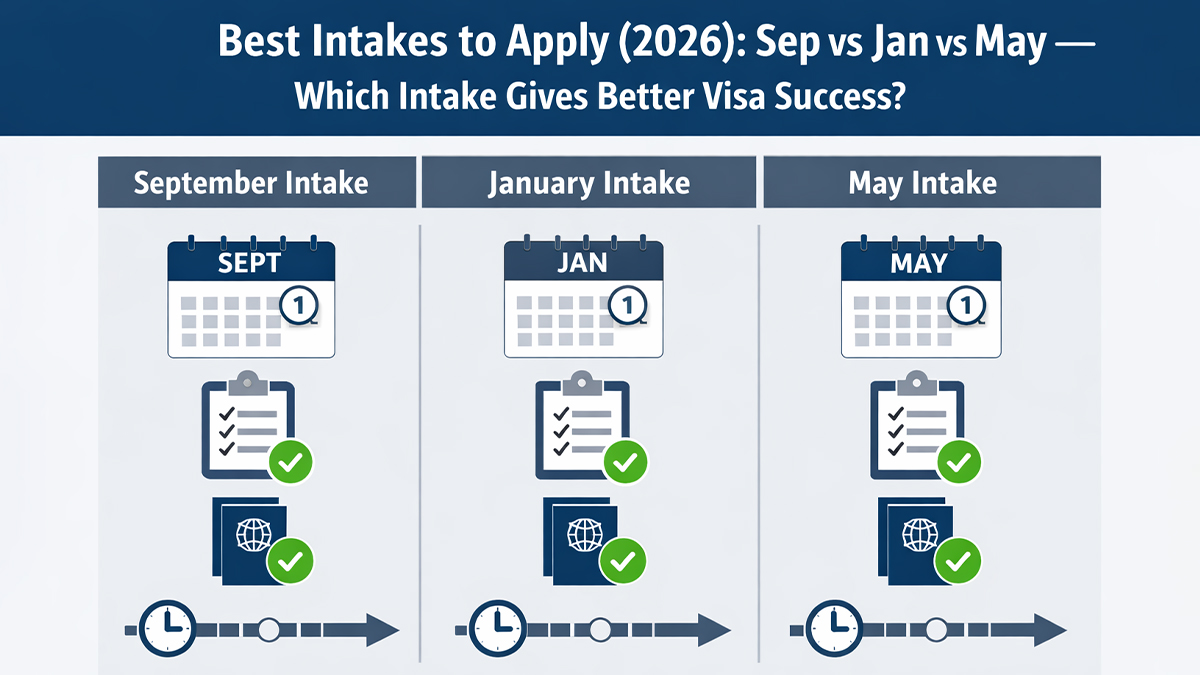
Choosing the best intakes to apply abroad is crucial for your visa success. Different intakes can have varying approval rates. For instance, factors such as correct documentation, school relevance, and immigration regulations can influence outcomes. Recent statistics indicate that the rejection rate for Indian students applying in January 2025 surged to 74%, significantly higher than the 32% rate in 2023. In this blog, we will explore the September, January, and May intakes to determine which one offers the best chance for approval.
Think about the January intake if you want less competition. Fewer applicants can help you get accepted and get a visa.
The May intake is not as busy, making the application process easier. But, it has fewer program choices and job options.
Always prepare your documents carefully. Common reasons for visa denial are not enough money and missing paperwork.
Start your application early to meet all deadlines. Timing is very important for getting your visa.
Visa Success Overview
Knowing about visa success trends is important for studying abroad. Approval rates can change a lot based on the intake you pick. Here are some trends to keep in mind:
Canada has a great approval rate of over 85% for Indian students. But, new policy changes might slow down processing times.
Insufficient Funds: You need to show you have enough money.
Lack of Genuine Intent: Prove you really want to study and go back home.
Incomplete Documentation: Make sure to send all needed papers correctly.
Inadequate Language Proficiency: You must meet the required test scores.
Misrepresentation: Giving false information can get you rejected right away.
Criminal Record: Serious crimes can lead to visa denial.
Failure to Satisfy Medical Requirements: Finish all required health checks.
Unsuitable Choice of Program: Your study program should match your background.
Limited Ties to Home Country: You need strong ties to ensure you return after studying.
Unclear Study Plan: A clear study plan is very important for your application.
By knowing these trends and reasons, you can prepare better and boost your chances of getting a student visa.
September Intake Advantages
Image Source: pexels
The September intake is the most popular choice for students who want to study abroad. This popularity brings many benefits that can help you get your visa.
Scholarship Opportunities
When you apply for the September intake, you can find many scholarship opportunities. Most scholarships are given out during this time, making it easier for you to get financial help.
Here are some important points:
Scholarships for studying abroad are more common in the fall than in other intakes.
The September intake matches the school year, which means more funding options.
Many universities have special scholarships for international students during this intake.
These things can make education cheaper and easier for you, which helps your chances of getting a student visa.
Job Prospects
The September intake also gives better job chances for students. The timing of this intake matches big hiring events, which can improve your career options.
With more courses available, you can pick programs that fit your career goals. Also, being in a larger group helps you network better, which can lead to internships and jobs after you graduate.
January Intake Benefits
The January intake has many benefits that can help you succeed when applying for a student visa. Knowing these advantages can help you choose wisely.
Less Competition
One big benefit of the January intake is less competition. Many students choose the September intake. This means fewer people apply in January. Fewer applicants can increase your chances of getting in. Here are some important points:
The January intake has fewer applicants, which helps your chances.
Students have better financial options during this time.
You get more time to prepare before your course starts.
This less crowded time can lead to a better chance of getting your visa because of the lower competition.
Course Availability
The January intake has some good points, but it also has fewer course choices. Many universities offer fewer programs then. However, this can be a good thing. Fewer options can mean faster visa processing times.
Most popular intake with many scholarships and funding opportunities.
January
Moderate
Limited options
Good for students needing more preparation time; less crowded.
May
Low
Few options
Generally for shorter or niche programs; least common intake.
Even though the January intake may not have as many courses, it lets you focus on your application. This focus can help you create a stronger and better visa application.
May Intake Insights
The May intake has special chances and challenges for students who want to study abroad. Knowing these things can help you decide better.
Advantages of May
One big plus of the May intake is that it is less crowded. This means you have a better chance to get into your chosen program if you missed the September intake.
Here are some important benefits:
Easier Application Process: With fewer people applying, you can focus on your application.
Less Pressure: You can take your time to get your documents and study plans ready.
Quick Processing: Fewer applications can lead to faster visa processing times.
Disadvantages of May
Even though the May intake has good points, it also has some downsides. Here’s a look at the challenges you might face:
Many programs are not available in May, which limits your choices.
Missed scholarship opportunities
Some scholarships may close earlier in the year, so you might miss out on funding.
Fewer job openings for internships
Starting in May might mean there are fewer job openings than in September.
Adjustments to a different academic calendar
You may need to get used to a different school schedule, which can affect internships or part-time jobs.
The timing of the May intake can change your job chances and work options after studying. While it is less competitive, the September intake fits better with major hiring times. This means you might find more job openings and internships if you start in September.
Picking the right intake can really affect your visa success. Here’s a quick look at each intake:
September Intake: Has the most programs, scholarships, and job chances. It’s great for students wanting a full educational experience.
January Intake: Has less competition and faster processing times. This intake is good for those who need more time to prepare.
May Intake: Offers a less busy application process but has fewer programs and job chances.
To improve your chances, match your school background and money situation with your chosen program. Visa officers want to see strong ties to your home country, so show that you plan to return after studying.
Remember, timing is very important. Start your applications early to make sure you meet all deadlines and requirements.
The September intake is usually the best option for Indian students. It has more programs, scholarships, and job chances. This time fits well with the school year, which helps your chances of getting in.
How can I improve my application success?
To boost your application success, make sure you have all needed documents. Pay attention to your Statement of Purpose and show you really want to study. When you apply also matters a lot for getting a visa.
Are there scholarships available for the January intake?
Yes, some universities give scholarships for the January intake. But, there are usually fewer options than in the September intake. Look into your chosen university’s offerings to find what is available.
What should I consider when choosing an intake?
Think about things like program choices, competition level, and scholarship chances. Each intake has its own benefits. Check your academic goals and money situation to make the best choice.
When is the application deadline for the May intake?
Application deadlines for the May intake change by university. Visit your chosen university’s website for exact dates. Start your application early to make sure you don’t miss any deadlines.